Payment Orchestration for High-Volume Sales Funnels

Get Checkout Champ Now!
Book A Demo

See everything Checkout Champ can do for you, meet our team and learn how we can help you grow.

Book a Demo

High-volume sales funnels live and die by their payment approval rates. When a single gateway fails or declines a valid card, revenue stops instantly. Protecting those profits demands more than basic payment gateway routing. Schedule a free payment orchestration consultation to evaluate your current gateway stack and identify revenue recovery opportunities.

Payment orchestration is a software layer that manages the entire end-to-end payment process by connecting many payment gateways and service providers into one platform. This technology allows high-volume merchants to route transactions based on real-time factors like location and gateway health, maximizing global approval rates with automatic failover protection.

Understanding how this technology stabilizes revenue is the first step toward building a resilient checkout experience. Below we examine how multi-gateway routing works, why high-volume funnels need orchestration, and how platforms like Checkout Champ deliver these capabilities at scale.

What Is Payment Orchestration for Ecommerce?

Payment orchestration is a technology layer that sits between your store and your payment providers. It acts as a command center for your transaction flow. This layer decides how to route, retry, and settle every sale across many different systems. Companies use it to manage payment gateway routing from one central control plane. This helps high-volume sellers avoid the constraints of depending on a single provider.

How the Orchestration Layer Works

Most online stores start with a single gateway connecting the store to one bank or processor. But as you scale, one bridge is not enough. You may need many processors to handle different regions, card types, and transaction profiles. An payment orchestration layer sits above these providers to guide each transaction intelligently. The system handles the complexity of connecting to multiple banks and tools, deciding how every payment moves through your infrastructure.

Payment orchestration connects your store to multiple gateways and routes each transaction to the optimal provider based on real-time conditions. This increases approval rates, reduces failed transactions, and ensures continuity when a processor experiences downtime.

Coordinating Sales and Data

Large online brands often need to manage many tools at once. Some sellers operate 20 or more payment integrations. Managing these individually introduces operational drag and reconciliation overhead. Orchestration consolidates everything in one place, making it straightforward to track sales, identify errors, and reconcile across your entire network.

The platform does more than just move money:

  • Automated retries — If a bank declines a valid transaction, the system immediately attempts the next available processor.
  • Real-time failover — When one provider experiences an outage, traffic cascades to healthy gateways without interrupting the checkout flow.
  • Global method expansion — Adding new payment methods for new markets requires no code changes to the core checkout.

Solving the Single-Gateway Problem

A single-gateway model ties your business to the rules of one provider. If that provider has an outage, your sales stop. If they do not support a local card type, you lose that customer. This model limits how fast you can grow and how well you can serve international buyers.

Payment orchestration replaces this fragile architecture with a resilient mesh of providers. When combined with choosing payment gateway integrations strategically, you can optimize for approval rate, cost, and latency simultaneously across every transaction.

How Multi-Gateway Routing Works in Practice

Multi-gateway routing evaluates each transaction against configurable rules and routes it to the best available processor. If that processor fails or declines, the transaction cascades to the next gateway in the chain automatically, often in under 200 milliseconds.

Multi-gateway routing is the core engine of payment orchestration. It does not randomly distribute transactions — it evaluates each attempt against a configured decision matrix and selects the optimal provider in real time.

The Dynamic Routing Flow

Here is how a typical transaction moves through a multi-gateway routing engine:

  1. Gathering Data: The system collects transaction context — currency, card BIN, customer location, device fingerprint, and historical decline patterns.
  2. Rule Checks: It evaluates each data point against your routing table. Transactions from UK customers using Visa may route through Gateway A, while Amex transactions route through Gateway B with better interchange rates.
  3. Primary Routing: The engine sends the transaction to the highest-priority gateway that matches all rule criteria.
  4. Quick Failover: If the primary gateway returns a hard decline or a timeout (typically a 30-second threshold), the engine retries on the next matching gateway without presenting an error to the customer.
  5. Approval and Settlement: The approved transaction settles through the successful gateway, and the orchestration layer logs the routing decision for reconciliation and optimization.
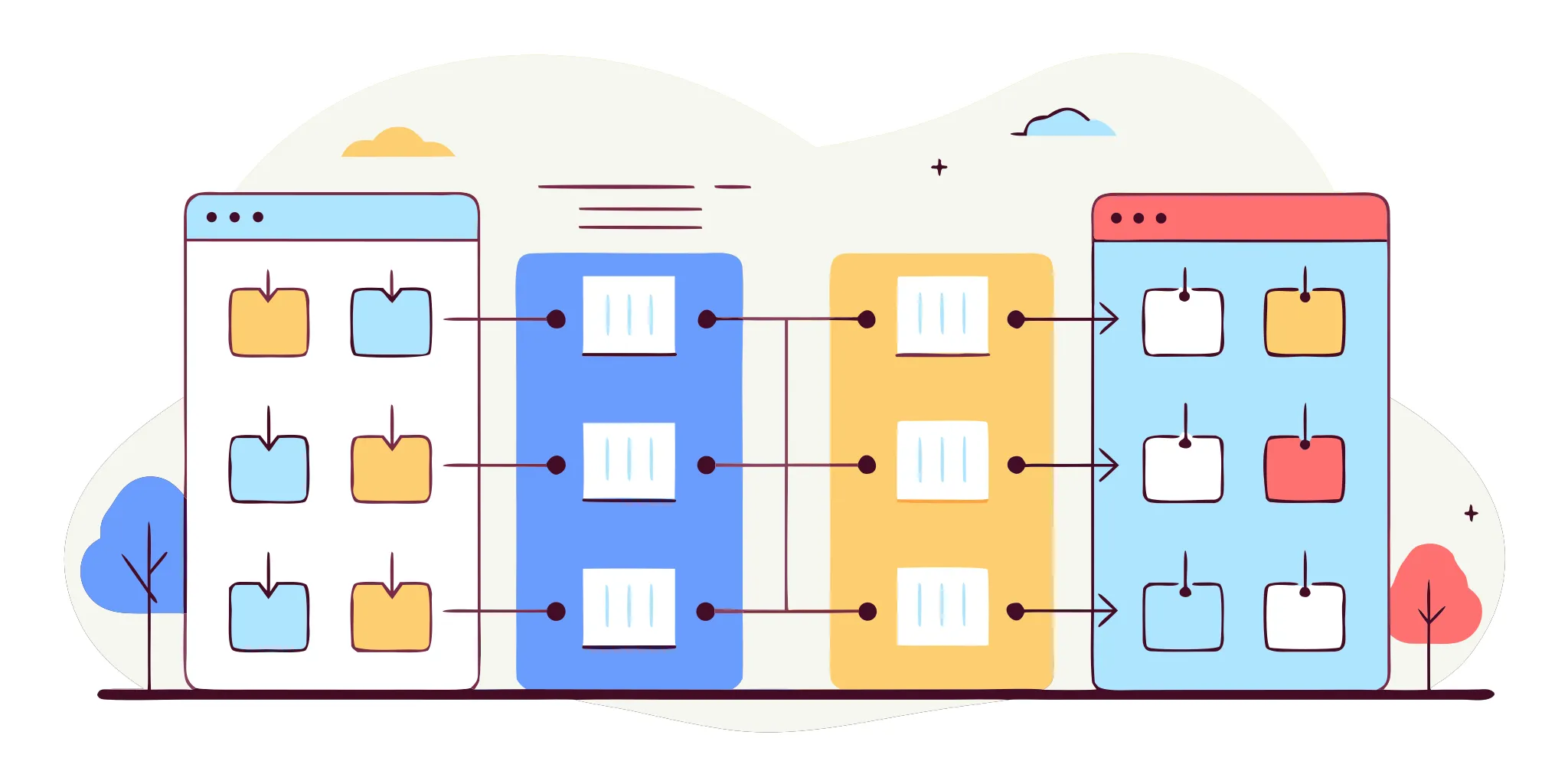
Technical diagram showing payment orchestration layer routing transactions between multiple payment gateways with automated failover paths

This flow happens in milliseconds. From the customers perspective, they simply enter their card details once and see an approval. The complexity of cascading gateways, currency conversion, and regional routing is abstracted behind a single checkout endpoint.

Payment Orchestration vs. Payment Gateways: What Is the Difference?

A payment gateway is a single connection between your store and a bank network. Payment orchestration is a control layer above multiple gateways that decides which processor handles each transaction, manages failover, and provides unified reconciliation across all providers.

Many merchants conflate these two terms. Understanding the distinction is critical when evaluating infrastructure options for a growing business.

The Bridge vs. The Management Platform

A payment gateway is a transactional bridge. It encrypts card data, sends it to the processing network, and returns an approval or decline. This is a point solution. Each gateway connects to a specific set of banks and processors, and each has its own uptime profile, fee structure, and geographic coverage.

Payment orchestration, by contrast, is a management platform. It does not replace gateways — it coordinates them. According to Spreedly, the orchestration layer decides how every payment moves through your system, giving you one point of control for your entire money flow.

Smart Routing and Unified Data

The key difference comes down to intelligence. A gateway passes through the transaction. An orchestration platform decides which gateway should handle it, when to retry, and how to optimize based on performance data. It also aggregates reporting across all providers so you can see true enterprise-wide payment performance in one dashboard — instead of logging into 12 different gateway admin panels.

CapabilitySingle Payment GatewayPayment Orchestration Platform
Number of providersOne connectionUnlimited connected gateways
Failover handlingManual or noneAutomatic cascading retry
Routing logicNo routing controlConfigurable by currency, region, card, AOV
Reporting scopeSingle gateway onlyUnified across all providers
Global payment methodsLimited to gateways local reachBroad coverage via provider network
Integration complexityPer-gateway API integrationSingle API for all providers

Why High-Volume Funnels Need Payment Orchestration

High-volume funnels processing over $400,000 per month face unique payment risks: single-gateway downtime, declining approval rates across certain card bins, and geographic limitations. Payment orchestration mitigates all three through automated routing and real-time failover.

Scale introduces payment complexity that point solutions cannot handle. Here is why high-volume operations specifically need orchestration rather than just a second gateway:

Protecting Revenue at Scale

For a merchant processing $1 million per month, every percentage point of checkout failure represents $10,000 in lost revenue. A single gateway outage lasting two hours could cost $2,700 or more. Payment orchestration eliminates single points of failure by distributing transaction volume across multiple processors. If one gateway goes down, traffic shifts to alternatives in milliseconds. Merchants using strategies to improve ecommerce payment approval rates see measurable recovery of lost revenue within the first month of implementation.

Optimizing Global Approval Rates

Different gateways have different approval rates by country, card brand, and transaction type. Gateway A may approve 94% of Visa transactions from the United States but only 76% of Visa transactions from Brazil. Gateway B may have the opposite profile. An orchestration platform routes each transaction to the gateway with the highest statistical likelihood of approval for that specific combination of variables.

  • Route US Visa-Amex transactions through Gateway A (94% approval)
  • Route EU Visa transactions through Gateway B (91% approval)
  • Route high-value transactions ($500+) through Gateway C with the best decline-retry logic
  • Crypto and alternative payments route to specialized processors

This granular routing alone can lift blended approval rates by 5-12 percentage points depending on geographic mix, directly increasing captured revenue.

Fueling Rapid Business Growth

When entering a new country, an orchestration platform lets you activate local acquiring and payment methods immediately — no new integration projects, no PCI scope expansion, no weeks of development. You simply add the new provider to your routing table. This speed advantage is material for growth-stage ecommerce brands expanding internationally.

How Checkout Champ Delivers Payment Orchestration at Scale

Checkout Champ provides native payment orchestration through 217 gateway integrations, configurable cascading routing rules, and automated failover that triggers in milliseconds when a processor times out or hits transaction limits.

Checkout Champ implements payment orchestration as a core platform capability rather than a third-party add-on. The platform connects to 217 payment gateway integrations natively, meaning each gateway is pre-integrated and maintained rather than requiring custom API development. This breadth of native connectivity is significant because it means routing decisions are not limited by integration backlog.

Managing Global Gateways with Smart Routing

Checkout Champ's routing engine evaluates every transaction against rules you define based on multiple dimensions:

  • Currency and geography — Send USD transactions through a US-acquiring gateway and EUR transactions through a European processor with better local rates.
  • Card brand — Route Amex transactions through a processor with negotiated Amex interchange rates while sending Visa/Mastercard through a different gateway.
  • Transaction velocity — Spread high-volume throughput across multiple gateways to avoid processor velocity limits.
  • Gateway health — Monitor real-time uptime and latency for each connected gateway and deprioritize degraded endpoints automatically.

Automated Recovery and Fraud Prevention

When a transaction fails on the primary gateway, Checkout Champ's cascading failover logic retries against the next gateway in the routing chain within the same checkout session. The customer sees no error, no retry prompt, no delay. The failed payment recovery process happens entirely behind the scenes.

The platform also includes built-in fraud screening that can be configured to decline or route suspicious transactions to higher-scrutiny processors, keeping the checkout flow fast for legitimate customers while protecting against chargebacks.

Key Features to Look for in a Payment Orchestration Platform

When evaluating payment orchestration platforms, prioritize native gateway integration breadth, configurable routing rules, automated failover latency under 500ms, unified reporting, and subscription billing support. These five capabilities determine whether the platform will scale with your business.

Not all orchestration solutions deliver the same capabilities. Here are the features that distinguish enterprise-grade platforms from basic gateway aggregators:

  • Broad Native Integrations. Look for 100+ pre-built gateway integrations maintained by the platform provider. Each native integration eliminates a development project and ongoing maintenance burden.
  • Smart Routing and Failover. The routing engine should support multi-dimensional rule configuration — by geography, currency, card BIN, transaction amount, and real-time gateway health. Failover should trigger in under 500ms.
  • Global Support and Currencies. The platform should support 100+ currencies and local payment methods including digital wallets, BNPL, and region-specific schemes.
  • Fast Page Loads and Uptime. The orchestration layer itself must not introduce latency. Look for sub-100ms overhead and 99.9%+ uptime SLAs.
  • Subscription and Dunning Tools. For subscription-based businesses, the platform needs native recurring billing, smart retry schedules, and dunning management.
  • Centralized Data and Analytics. Unified reporting across all gateways is essential for identifying routing optimization opportunities and troubleshooting declines.
  • Full Business Ecosystem. The best orchestration platforms integrate with the rest of your tech stack — CRM, ERP, analytics, and marketing automation — so payment data flows into business intelligence without custom pipelines.
Flowchart of multi-gateway routing logic showing transaction evaluating gateway health, currency, and geography before routing to backup gateway on failure

Frequently Asked Questions

At what processing volume does payment orchestration pay for itself?

Most merchants find that payment orchestration delivers a positive ROI once they exceed $200,000-$400,000 in monthly processing volume. At this threshold, the revenue recovered from improved approval rates and avoided downtime typically exceeds the platforms transaction fee or monthly subscription. Checkout Champ offers built-in orchestration capabilities across all plans, making it accessible to growing businesses before they hit enterprise scale.

Can I use payment orchestration to route transactions by country?

Yes. Geographic routing is one of the most common use cases for payment orchestration. You can configure rules that send transactions from specific countries to gateways with local acquiring relationships, better interchange rates, or higher approval rates in that region. This is particularly valuable for merchants expanding into Europe, Latin America, and Asia-Pacific where local payment methods dominate.

How does multi-gateway routing handle a processor outage?

When the primary processor returns a timeout or a clear connectivity error, the orchestration layer immediately routes the transaction to the next available gateway in the routing chain. Modern platforms complete this failover within milliseconds, and the entire process is transparent to the customer. No error message, no retry button, no abandoned cart due to gateway downtime.

Does using an orchestration layer impact page load speeds?

A well-architected orchestration layer adds less than 100ms of overhead to checkout processing. The critical factor is that the orchestration decision happens server-side before the payment API call is made, meaning the customers browser experiences the same single-roundtrip checkout flow they would with a direct gateway integration. Platforms like Checkout Champ are built on a sub-second page load architecture that ensures orchestration logic does not degrade front-end performance.

Ready to Build a Resilient Payment Infrastructure?

High-volume sales funnels cannot afford single-gateway risk. Every hour of downtime, every declined transaction that could have been routed to a different processor, represents real revenue that flows to competitors with more resilient infrastructure. Payment orchestration with multi-gateway routing is no longer a luxury for enterprise merchants — it is a requirement for any brand processing significant transaction volume across multiple regions or card types.

Contact Checkout Champ today to schedule a personalized demo and learn how our 217 native gateway integrations and smart routing engine can protect and grow your funnel revenue.