


Subscription Analytics Ecommerce: Metrics That Predict Growth

Level Up Today!
Book a DemoScale is impossible when you do not know the exact cost of each new subscriber you sign. Most brands spend more on acquisition than a customer ever pays back simply because they lack visibility into the recurring metrics that matter. You must track the right numbers to stay in the green and build a sustainable growth engine.
Subscription analytics ecommerce is the practice of tracking recurring revenue metrics including MRR, churn rate, customer lifetime value (LTV), and cohort retention to guide growth decisions. Brands that monitor these data points can identify high-value customer segments, reduce churn triggers, and scale with predictable unit economics.
Ready to put your subscription data to work? Book a demo of Checkout Champ's analytics and subscription billing platform and see how integrated reporting helps you track every metric in one place.
What Is Subscription Analytics Ecommerce?
Subscription analytics ecommerce tracking is a set of tools and practices used to study recurring sales data over time. In a standard retail shop you might only care about each individual transaction. But brands using a subscription model must track how customers behave across many months and billing cycles. This longitudinal data reveals how much recurring revenue you can expect, which products drive retention, and where your funnel leaks customers.
Subscription metrics shift your focus from today's sales to next year's profit. Instead of optimizing for a single transaction, you optimize for the lifetime relationship. This distinction is what separates high-growth subscription brands from stores that struggle with churn.
Moving past one-time sales
Traditional ecommerce analytics tools track individual purchases but miss what happens after the first transaction. Subscription analytics focus on the long arc of the customer relationship. Rather than measuring cost per acquisition in isolation, you measure how much that customer spends over 12, 24, or 36 months. This shift is critical for sustainable growth.
When you use ecommerce analytics tools designed for recurring revenue, you see retention patterns clearly. You might discover that a low introductory price drives higher churn after three months. Or that customers acquired through a specific channel retain at twice the rate of others. These insights let you allocate ad spend where it generates the highest long-term return.
The power of the long-term bond
A subscription business depends on a steady relationship between the merchant and the buyer. This bond starts with the first payment and strengthens with every successful billing cycle. Research published by the National Institutes of Health confirms that recurring revenue models rely on sustained customer trust and consistent value delivery.
This ongoing relationship changes how you communicate with subscribers. You are no longer just a storefront; you are a partner in their daily operations. Your data should reflect this depth. It tracks not just the transaction but the health of the customer relationship. If engagement slows, your analytics should tell you why before the customer churns.
Predicting future growth
The most powerful aspect of subscription analytics is its predictive capability. With a steady recurring revenue ecommerce model, you can forecast your minimum monthly income based on active subscribers. This predictability makes it easier to plan hiring, inventory, and marketing spend with confidence rather than guessing based on seasonal trends.
Data also reveals how to scale safely. When your churn rate is low and well understood, you can confidently increase customer acquisition spend. Brands that track these metrics can test new offers, pricing tiers, and retention campaigns with real-time feedback from their analytics.
Key Subscription Ecommerce Metrics for Sustainable Growth
Building a healthy subscription model starts with knowing your numbers. Industry benchmarks from Recurly's 2024 Subscription Benchmarks show that the median monthly churn rate across industries is 5.6%, while top-quartile performers keep churn below 3%. To reach those levels, you need to monitor the right subscription analytics ecommerce metrics consistently.
Data helps you see the full picture of your store. Most brands focus on top-line sales, but recurring models require a different set of signals. You must track retention depth to determine whether your growth is durable or propped up by short-term acquisition spend.
Monitoring revenue health and stability
Steady growth requires clear visibility into your cash flow. Subscription analytics give you a direct view of income trajectory by tracking how many subscribers stay or leave each month. This data tells you whether your recurring revenue base is expanding or eroding. Without these insights, you cannot determine whether your marketing is attracting the right customers or simply buying transactions that do not stick.
Platforms with native subscription billing make it easier to gather this data in one place. When billing and analytics are unified, you eliminate data silos and reduce the risk of reporting errors. A single source of truth helps you react faster when trends shift and identify which subscription tiers deliver the strongest retention.
Finding long-term customer worth
Understanding customer lifetime value (LTV) is essential for setting your acquisition budget. If you know what a subscriber is worth over their full relationship with your brand, you can determine exactly how much to spend acquiring them. The math involves multiplying average order value (AOV) by purchase frequency by average customer lifespan.
For example, a customer who spends $50 per month and stays for 24 months generates $1,200 in LTV. If your cost to acquire that customer is $400, your LTV-to-CAC ratio is 3:1, which is the benchmark most healthy subscription businesses target. Recurly's benchmarks confirm that top-performing brands maintain LTV-to-CAC ratios above 3:1 through consistent retention optimization.
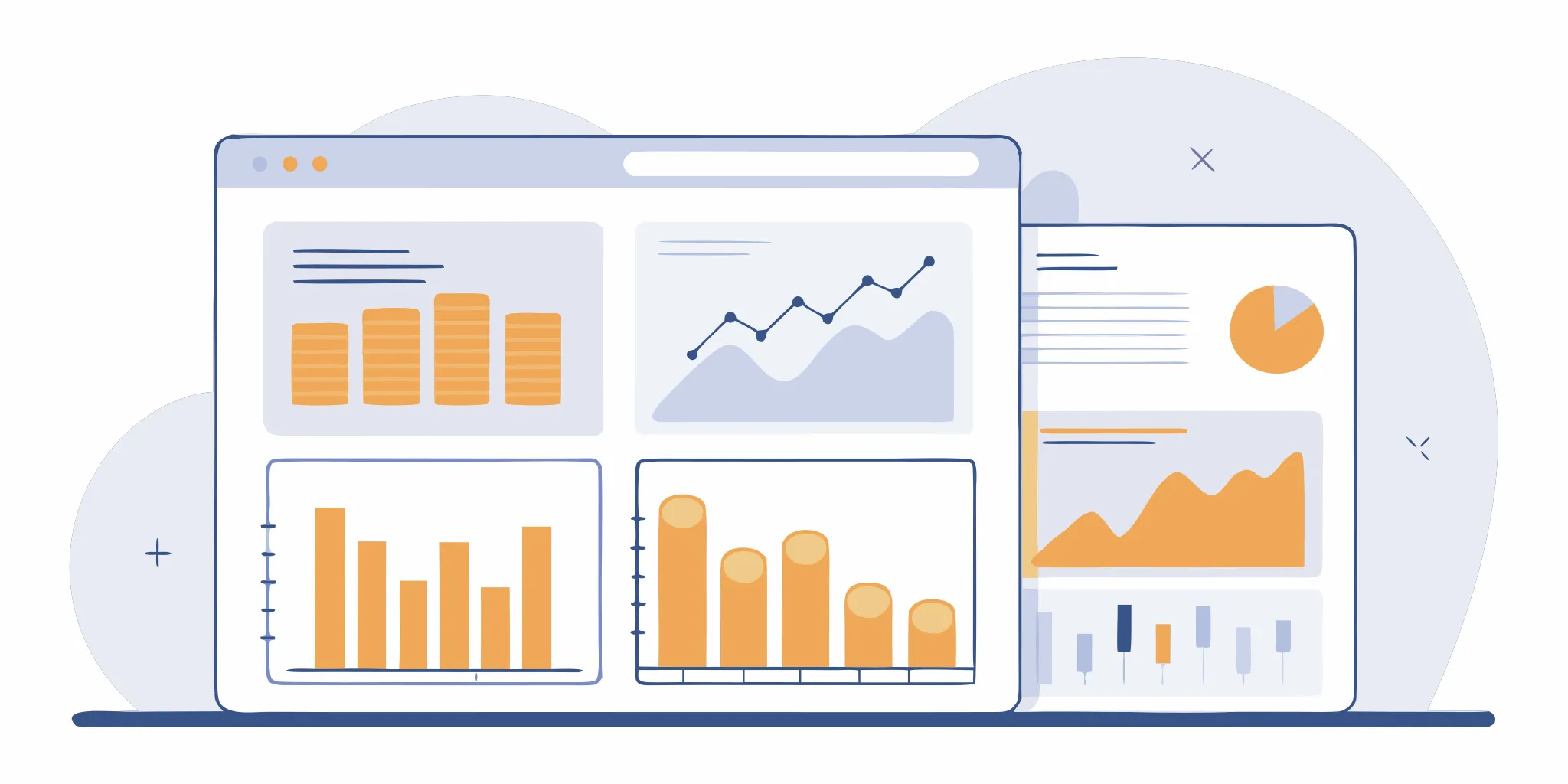
Tracking these values helps you identify your highest-value customer segments. You can see which acquisition channels produce subscribers with the highest LTV and longest retention. Over time this makes your marketing more efficient. You stop spending on channels that attract subscribers who cancel after a single billing cycle.
- Track Monthly Recurring Revenue (MRR). MRR represents your predictable monthly income from active subscribers. A steadily rising MRR indicates sustainable growth.
- Monitor churn and retention rates. Churn is the percentage of subscribers who cancel. Retention is the percentage who stay. Leading subscription businesses track both monthly and annual churn to detect trends early.
- Measure Average Order Value (AOV). AOV tracks the average amount spent per transaction. Increasing AOV through upsells and product bundling directly improves LTV.
- Review upgrade and downgrade trends. Monitoring plan migration patterns reveals whether customers find increasing value in your offering or whether pricing adjustments are needed.
- Calculate Customer Lifetime Value (LTV). LTV predicts the total revenue a single customer generates. This metric is the foundation for acquisition budget decisions and retention investment.
Why Does the LTV-to-CAC Ratio Matter for Subscription Brands?
The LTV-to-CAC ratio is the single most important efficiency metric for subscription businesses. It tells you whether your growth engine is profitable or if you are spending more to acquire customers than they will ever repay. Recurly's benchmark data indicates that the median subscription business operates at a 2.5:1 LTV-to-CAC ratio, while top-quartile performers exceed 5:1.
Customer Acquisition Cost (CAC) includes all sales and marketing expenses required to gain one new subscriber. If your CAC is too high relative to LTV, your brand will struggle to maintain profitability as you scale. The subscription analytics ecommerce tools you use should track both metrics side by side so you can see the relationship in real time.
How to calculate Customer Lifetime Value
Calculating LTV is straightforward. Multiply your Average Order Value (AOV) by purchase frequency per period. Then multiply that result by the average customer lifespan in the same time units. For a subscription business with monthly billing: LTV = AOV x purchases per month x average months retained.
A concrete example: a customer spends $40 per month and stays for 30 months. Their LTV is $1,200. If it costs you $300 in marketing to acquire them, your LTV-to-CAC ratio is 4:1. High AOV and long retention periods are the most effective levers for improving this ratio.
Maintaining a winning 3:1 ratio
Industry benchmarks suggest aiming for a minimum 3:1 LTV-to-CAC ratio. This means each subscriber should generate three times what you spent acquiring them. A 1:1 ratio means you are breaking even on acquisition before accounting for operating costs, fulfillment, and overhead. A 3:1 ratio provides enough margin to cover those costs and reinvest in growth.
Tracking this ratio helps you monitor the health of your acquisition engine. If CAC rises, your LTV must rise proportionally or your margins will compress. Brands that monitor LTV-to-CAC on a monthly basis can identify channel degradation early and reallocate budget before profitability suffers.
Tracking success with cohort retention
Cohort retention analysis groups subscribers by the month they joined and tracks how each group behaves over time. This approach reveals whether newer subscribers retain as well as older ones. If the January cohort retains at 80% after six months but the June cohort retains at 60%. Something changed in your acquisition funnel, onboarding, or product experience between those months.
Cohort analysis is one of the most actionable ecommerce analytics reporting techniques available. It isolates the effect of changes to your pricing, marketing channels, or product features. When you spot a retention decline in a specific cohort, you can investigate the root cause and correct it before the trend spreads across all new subscribers.
How Do Failed Payments and Passive Churn Block Subscription Growth?
Passive churn is a silent threat that can undermine your scaling efforts. It occurs when a subscriber does not actively cancel but their payment fails due to an expired card, insufficient funds, or a bank block. These involuntary churn events can inflate your churn rate significantly. Research from Stripe indicates that 20-30% of recurring payment failures can be recovered with smart retry logic.
Using smart subscription analytics ecommerce tools helps you detect these failures before they compound into lost revenue. When billing data and analytics are connected, you see exactly where payments are failing and can take corrective action.
The cost of payment failures
Most brands underestimate the revenue impact of failed payments because they lack visibility into the recovery funnel. When a transaction fails and the subscriber churns involuntarily, you lose not only that month's revenue but all future revenue from that relationship. This is why integrated native subscription billing is so valuable. It keeps payment data and analytics in a single system so you can track dunning success rates and recovery performance alongside your core metrics.
Failed payments distort your churn data. Without proper tracking, you might conclude that subscribers are leaving because they dislike your product when the real cause is a payment processing issue. Accurate data helps you distinguish voluntary churn from involuntary churn, so you invest in the right fixes.

Recovering revenue with smart billing logic
You can reduce passive churn by implementing smart payment recovery strategies. Automated dunning emails notify subscribers when their card is about to expire or a payment has failed. Smart retry logic attempts the charge again at optimal times when banks are more likely to approve. Intelligent gateway routing sends the transaction to the processor with the highest approval probability for that specific card type.
These techniques, when combined, can recover 20-30% of failed recurring payments according to Stripe's benchmarks. For a brand with $1 million in annual recurring revenue, that represents $200,000-$300,000 in recovered revenue per year without any change to the product or pricing.
- Automated dunning: Send reminder emails at 3, 5, and 7 days after a payment failure with update links.
- Smart retry schedules: Attempt retries on different days of the week and times of day to maximize approval rates.
- Card updater services: Use network-provided card updater tools to automatically obtain new card numbers and expiration dates when a subscriber's card is replaced.
- Grace period logic: Offer a brief service continuation period after a failed payment so subscribers can update their payment method without losing access.
Better control with real-time data
To win at subscriptions, you need to see what is happening right now. Full ecommerce analytics reporting lets you spot payment declines the moment they occur. You do not have to wait for a month-end report to detect a billing issue. You can monitor gateway performance, retry success rates, and dunning conversion in a single dashboard.
Integrated tools let you track subscription growth alongside checkout performance. This means you can see if a new checkout flow or pricing change is causing more payment declines. Having this visibility in real time helps you test new strategies without risking your core recurring revenue stream.
Selecting the Right Subscription Billing and Analytics Platform
Choosing your technology stack is one of the most consequential decisions for a scaling subscription brand. Your tools must handle complex recurring billing while surfacing actionable analytics in a unified view. A well-integrated platform helps you build a durable long-term relationship with subscribers through consistent, reliable service. When your data is scattered across disconnected tools, you cannot make fast decisions to optimize growth.
The cost of separate systems
Many brands use separate applications for billing, funnel management, email marketing, and analytics. This fragmented approach creates data gaps and drives up monthly software costs. When your tools do not share data seamlessly, you lose visibility into the full subscriber lifecycle. A unified platform lets you track subscription health metrics alongside checkout conversion rates and payment recovery performance.
Using one integrated platform also reduces the risk of data errors. Manual data transfers between systems introduce mistakes in churn calculations, revenue reports, and cohort analysis. A single source of truth eliminates these errors and frees your team to focus on strategy rather than reconciling spreadsheets.
Why speed and funnel design matter
Page speed directly impacts subscription conversion and retention. Slow checkout pages increase abandonment rates at the point of purchase and create friction during recurring billing. Platforms with sub-1 second page loads provide the best environment for maximizing conversion rates and minimizing payment failures during checkout.
Well-designed sales funnels also boost conversion. A streamlined checkout makes it easier for customers to subscribe to a recurring plan. High-converting funnels allow you to test pricing tiers, trial offers, and upsell sequences with lower risk. When your billing and funnel tools are unified, you can optimize the entire subscriber journey from first visit to long-term retention.
| Feature | Legacy Billing Setups | Integrated Performance Platform |
|---|---|---|
| Page Load Speed | Often 3 to 5 seconds | Sub-1 second page loads |
| Integration Type | Disconnected third-party apps | Full platform consolidation |
| Checkout Conversion | Basic checkout pages | High-converting sales funnels |
| Analytics Setup | Manual data syncing | Native, integrated reporting |
| Billing Logic | Simple recurring tasks | Advanced subscription management |
| Payment Recovery | Manual retry processes | Automated dunning and smart retry |
Using a fast, integrated platform gives you a measurable competitive advantage. It lets you react to trends as they emerge rather than waiting for disconnected systems to sync data. This speed and operational focus are what distinguish high-growth subscription brands from those stuck in maintenance mode.
Frequently Asked Questions
What is a healthy monthly churn rate for subscription stores?
Healthy monthly churn rates vary by industry, but top-quartile subscription businesses maintain churn below 3%. The median across industries is approximately 5.6% according to Recurly's 2024 benchmarks. High churn indicates potential issues with product-market fit, pricing, or the customer experience. Tracking churn by acquisition channel helps identify the root cause.
Can you track subscription analytics in standard Google Analytics?
Standard Google Analytics is not designed for recurring revenue tracking. It focuses on session-level data rather than customer lifecycle metrics. It often misses repeat purchases that occur without a new site visit. Most growing subscription brands use a combined platform like Checkout Champ that connects billing data with analytics, ensuring every recurring payment is recorded and attributed correctly.
What is the difference between MRR and ARR?
Monthly Recurring Revenue (MRR) measures your predictable monthly income from active subscribers. Annual Recurring Revenue (ARR) is MRR multiplied by 12, representing your projected yearly revenue. ARR is most useful for annual planning and investor reporting, while MRR is better for tracking month-over-month growth trends and detecting immediate changes in subscription health.
How many subscription metrics should an ecommerce brand track?
Start with five core metrics: MRR, churn rate, customer lifetime value (LTV), LTV-to-CAC ratio, and cohort retention. These five provide a complete picture of acquisition efficiency, revenue stability, and retention health. As your analytics maturity grows, add upgrade and downgrade rates, failed payment recovery rate, and expansion MRR for deeper operational insight.
Ready to Turn Your Subscription Data Into Predictable Growth?
Tracking the right subscription analytics ecommerce metrics is the difference between guessing and knowing. With MRR, churn, LTV, and cohort retention visible in a single dashboard, you can make confident decisions about acquisition spend, pricing strategy, and retention investment. The brands that win at subscription commerce are the ones that measure what matters and act on the data.
Book a demo of Checkout Champ to see how integrated analytics, native subscription billing, and automated payment recovery work together in one platform built for growth-stage ecommerce brands. Call us at (888) 733-4330 to speak with our team.